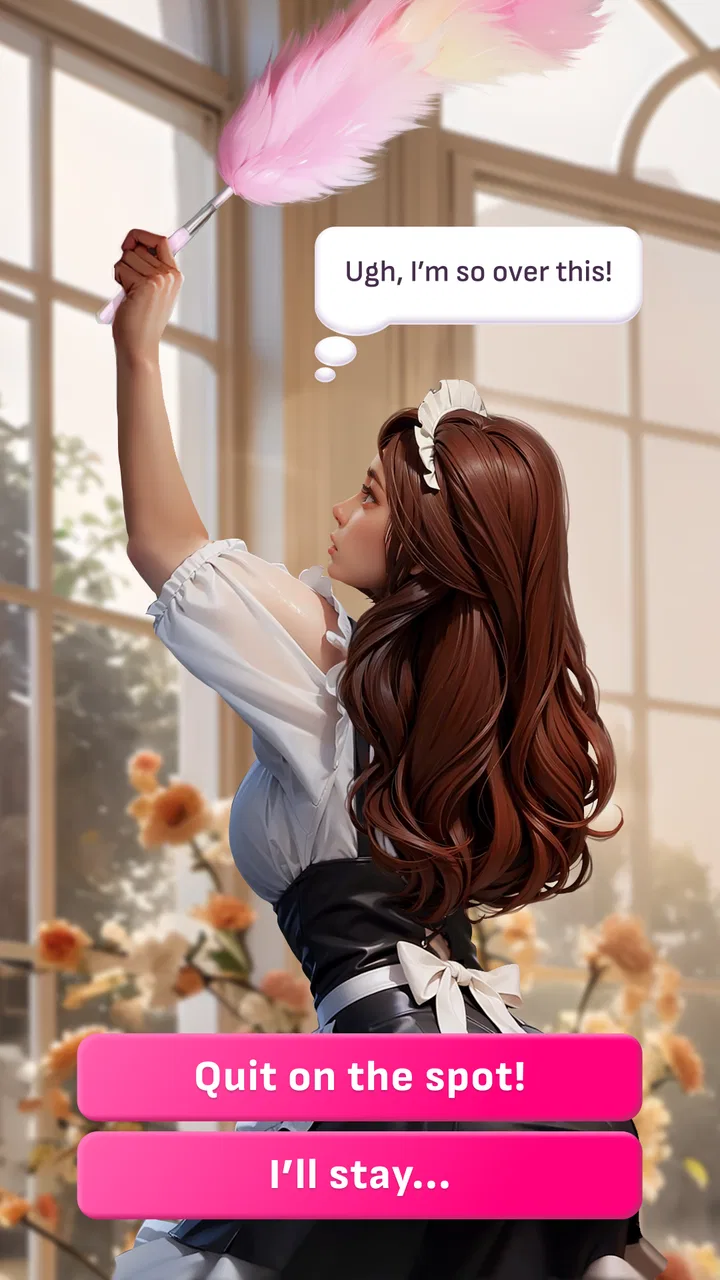
Blushed - Romance Choices
- 4.4
- Rating
- 5.00M
- Installs
- Free
- Price

 Analysis by App-foxy
I went into Blushed - Romance Choices expecting a light interactive romance and found something more deliberate than a simple sequence of romantic scenes. It is a simulation game built around an AI-powered romantic adventure, with the player’s choices shaping the direction of each love story. That premise makes the game most interesting when I treat a conversation as a decision rather than as a button-pressing exercise.
The basic appeal is easy to understand. You read a situation, decide how your character responds, and watch the relationship develop from that choice. The experience is personal because there is no single “correct” romantic style to follow. I could be cautious, direct, playful, or emotionally guarded, depending on the kind of story I wanted to create. That freedom is also the game’s main responsibility: if I rushed through every decision, I lost much of what made the experience feel distinctive.
Blushed - Romance Choices is free to start and comes from MILOSERVE ENTERPRISES LTD. It sits in the simulation category, carries a Mature 17+ rating, and is available for devices running Android 9 or later. The game launched on January 12, 2024, and its current version is 1.3.7. With more than five million installs and an average rating of 4.4 from roughly seventy-eight thousand ratings, it has clearly found an audience for choice-driven romantic storytelling.
You May Also Like

 Blood Strike: 2.5 Anniversary
Blood Strike’s Loadouts Turn Every Drop Into a Tactical Gamble
A close look at Blood Strike’s custom loadouts: how fast access to signature weapons reshapes its battle royale rhythm, rewards preparation, and narrows the gap between fights.

 Pandora - Music & Podcasts
Pandora’s Music Is Easy to Start, but Harder to Recover
Pandora’s strength is its low-effort path from a seed to a station. Its weak spot is how much confidence it asks you to place in connection, setup, and quiet recovery.

 8 Ball Pool
 Is Built on Rivalries, Rematches, and Routine
A close look at the rivalries, rematches, shared routines, and unanswered safety questions that turn a quick pool match into a persistent mobile community.

 Samsung Music
’s Quiet Strength Is Playing What You Already Own
Its reach comes less from spectacle than from dependable access to a personal library. That simplicity is both the app’s strongest retention engine and its ceiling.

 AccuWeather: Weather Radar
AccuWeather Review: A Quick, Clear Forecast for Everyday Decisions
For everyday plans, the best forecast is the one you can understand quickly. AccuWeather makes rain timing, radar, and local conditions easy to act on, with a few trade-offs.

 Hill Climb Racing
Why Hill Climb Racing Still Turns Crashes Into One More Run
A tiny car, a bumpy hill and one more upgrade: Hill Climb Racing keeps resurfacing because its simple chaos makes every near-miss feel personal.
More From Our News Desk



How the choices create a personal romantic story
The strongest part of Blushed is the space between what I want to say and what I decide to say. In a conventional romance game, the route can sometimes feel like a checklist: choose the flattering response, collect affection, and move forward. Here, the AI-focused design suggests a more conversational experience, so I paid closer attention to tone and timing. A response that seemed harmless in isolation could change the emotional direction of the scene.
That does not mean every decision feels equally important. Some moments are naturally more memorable than others, especially when a conversation touches on trust, vulnerability, jealousy, or commitment. Those are the points where I felt the game’s premise working best. Instead of asking only whether a choice is “good,” I found myself asking whether it matched the personality I had been building.
One useful way to play is to choose a clear relationship approach before starting a session. I tried imagining my character as someone who values honesty over charm, then avoided selecting flattering answers simply because they sounded pleasant. This made the story more coherent. On another run, I played more impulsively and accepted the possibility of awkward outcomes. The contrast helped me see that the game is more rewarding when choices reflect a plan rather than random experimentation.
This is also where the game differs from passive romance stories. In a novel or a show, I watch characters make emotional mistakes from the outside. In Blushed, I own those mistakes. If I avoid a difficult conversation, that avoidance becomes part of my version of the relationship. The result is not always comfortable, but it gives ordinary dialogue more weight.
Players who want constant action may find this slow. The central activity is reading, interpreting, and choosing, not controlling a character through a busy environment. I would recommend it to someone who enjoys interactive fiction, relationship simulations, and stories where conversation is the main form of play. I would not choose it for a quick arcade session or for anyone looking for combat, racing, or a traditional management simulation.
Planning a route instead of chasing every pleasant answer
The most practical lesson I took from the game is that short-term charm and long-term consistency are not always the same thing. A sweet response may create an enjoyable moment, but a more honest answer can support a stronger story later. I began reading each choice in two ways: first for its immediate emotional effect, and then for what it implied about my character.
That approach is especially useful when deciding whether to reveal something personal in a conversation. I did not treat openness as automatically superior. Sometimes holding back made sense for the character I was playing; at other times, it felt like I was protecting the relationship from a necessary truth. The interesting trade-off is that both options can be believable, but they lead to different kinds of romance.
A second helpful habit is to pause before selecting an answer when two options seem attractive. The game encourages quick emotional reactions, yet a few extra seconds let me consider whether I was choosing for the character, for the partner, or simply for the outcome I hoped to unlock. That small distinction improved my decisions more than trying to predict a hidden “best” route.
I also found value in replaying a meaningful exchange with a different attitude. Rather than restarting every time a scene became uncomfortable, I allowed one playthrough to develop naturally. Later, I revisited the same kind of situation with a more direct approach. This made the contrast between personalities clearer and helped me understand which choices were genuinely interesting rather than merely rewarding.
Where the risk and reward become noticeable
Romance games often make risk easy to identify: say the right thing and receive affection, say the wrong thing and lose progress. Blushed is more appealing when I stop treating it as a score hunt. The risk is not only losing a favorable reaction. It is creating a relationship that does not match the image I have been presenting.
For example, a player may consistently choose confident, flirtatious responses because they produce exciting scenes. That can be satisfying in the moment, but it may feel inconsistent if the same character later needs to handle a serious emotional conversation. I got better results when I accepted that a believable relationship includes uncertainty, hesitation, and occasional disagreement.
The reward is therefore partly narrative. A successful choice is one that makes the next exchange feel earned. When a character responds warmly after I had previously shown patience or honesty, the moment carries more meaning than a generic compliment. I cannot guarantee that every player will experience the same emotional rhythm, but the possibility of shaping that rhythm is the game’s key strength.
There is also a practical financial trade-off. The game is free, but optional in-app purchases range from ninety-nine cents to one hundred ninety-nine dollars and ninety-nine cents per item. I would advise setting a personal spending limit before playing, particularly because romantic stories can make progress feel emotionally urgent. Waiting before buying anything is sensible: first decide whether the writing style, pacing, and choice system are strong enough for your habits.
That advice matters more here than it would in a purely mechanical game. If I am invested in a character or a developing relationship, I may feel pressure to pay for convenience or continuation without first considering whether the purchase improves the overall experience. I prefer to play the free portion calmly, identify what I genuinely enjoy, and only then decide whether spending fits my budget.
The Mature 17+ rating should also be taken seriously. This is not a game I would hand to a younger player simply because it uses a conversational format. Adults who are comfortable with mature romantic themes are the intended audience, and anyone sharing a device should keep that rating in mind.
Adapting when a conversation does not go as planned
My favorite aspect of the decision system is that an awkward response does not automatically make a session worthless. In fact, an imperfect exchange can give the story more direction. When I chose an answer that created tension, I tried not to compensate immediately with a string of overly agreeable replies. Instead, I treated the tension as information about the relationship and adjusted my next response carefully.
This creates a useful form of counterplay. The game is not only asking, “Which option gives the best result?” It is asking, “How will I respond to the result I have already created?” If a character seems distant, I can become more patient, clarify my intentions, or accept that the relationship may not move in the direction I first wanted. Those are different strategies, and each produces a different kind of role-playing experience.
A realistic everyday scenario shows why this matters. Imagine playing during a quiet evening after work. I might begin with the intention of creating a confident, romantic character, but a difficult exchange could reveal that I am choosing answers for immediate approval rather than for consistency. Instead of restarting, I could continue with a more thoughtful tone. The session then becomes a small experiment in communication, not just a search for the most attractive response.
Another useful approach is to separate experimentation from a serious playthrough. In an exploratory session, I can test unusual answers and see how the conversation reacts. In a focused session, I can keep a stable personality and accept the consequences of my choices. Mixing those goals can be frustrating because I may not know whether I am building a story or simply testing the boundaries of the system.
I would also avoid making decisions while distracted. Because the game depends on dialogue, skipping lines or tapping quickly can remove the context needed to understand a choice. It works better as a short, attentive reading session than as background entertainment while doing something else. That is an important limitation for players who prefer games they can play almost automatically.
What gives the experience depth over time
The long-term value depends on how much I enjoy replaying emotional situations from different perspectives. The initial story can be engaging because I want to see what happens next, but replayability comes from asking how a different personality would change the relationship. A cautious character, a flirtatious character, and a blunt character do not create the same experience even when they face a similar situation.
That depth is more reflective than strategic in the traditional gaming sense. I am not managing a visible city, optimizing a production chain, or mastering a combat system. I am managing consistency, timing, and emotional intent. Players expecting detailed resource systems may find the simulation label surprising. The game’s simulation comes from participating in a relationship scenario, not from operating a complex physical world.
The AI-powered concept is most valuable when it makes conversations feel responsive enough to support that role-playing. It also creates a possible weakness: players who want tightly authored dialogue may prefer a conventional branching visual novel, where every line and outcome is deliberately fixed. A traditional romance game can offer stronger visual direction, more predictable pacing, and a clearly mapped route. Blushed is better suited to someone who values the feeling of personal interaction over complete authorial control.
Compared with dating simulators that focus on schedules, gifts, statistics, or daily optimization, this game places more emphasis on the conversation itself. That makes it easier to start and less demanding in terms of routine management. The trade-off is that players who enjoy building a relationship through a broad set of activities may find the experience narrower.
Compared with ordinary chat applications, Blushed has a clearer game purpose. I am not entering an open-ended conversation without direction; I am participating in a romantic adventure shaped by choices. That structure helps maintain momentum. At the same time, anyone seeking real human connection should not confuse the game with a social platform. Its value is imaginative and interactive, not a replacement for genuine relationships.
The current version, 1.3.7, is the version I would look for when installing, since staying updated is especially relevant for a game built around evolving conversational technology. I would also check device compatibility before downloading: the minimum requirement is Android 9. On a supported phone, I would reserve enough attention for reading rather than judging the game solely by how quickly it opens or how short a session can be.
Who should play, and who should choose something else
I think Blushed is a good match for adults who enjoy romance, interactive fiction, and decisions with emotional consequences. It suits players who like imagining a character, testing different communication styles, and revisiting a story to see how another approach changes the mood. It can also work well for someone who wants a slower game to play alone in brief, focused sessions.
I would be more cautious recommending it to players who dislike romantic tension, mature themes, or conversations that do not always deliver immediate rewards. It is also not ideal for people who want a completely predictable storyline. The appeal depends on accepting some uncertainty and allowing the relationship to develop rather than demanding a perfect result after every choice.
Players with a strict no-purchase preference can still approach it as a free game, but they should remain aware of the optional purchase range and avoid making emotional decisions about spending. If the possibility of paid items makes the experience uncomfortable, a fully premium romance game with one upfront price may be a better alternative. If the player wants more systems and less dialogue, a life simulation or management game would also be a stronger fit.
For families, the Mature 17+ rating makes the decision straightforward: I would keep it for adult players and avoid treating it as general-audience entertainment. For someone choosing between this and a visual novel, I would pick Blushed when interactive, AI-oriented conversation is the priority. I would pick the visual novel when carefully authored scenes, fixed character arcs, and a more controlled presentation matter more.
My strategy verdict after spending time with it
Blushed works best when I play it as a relationship experiment rather than a reward machine. The meaningful decisions are not always the most obviously romantic ones. Patience, consistency, and the willingness to accept an imperfect exchange can produce a more satisfying story than constant approval-seeking. That is the central strategic insight: protect the personality of the route, not just the mood of the current message.
Its weaknesses are tied to the same design. Conversation-focused play can feel slow, replaying may not appeal to everyone, and the free-to-play structure requires self-control around optional purchases. The game also cannot replace the broader systems or carefully scripted presentation offered by other romance and simulation titles. Those are real reasons to choose something else.
Still, I found the choice-driven format easy to settle into, especially when I gave each session a clear intention. I could play for a few minutes to continue a story, or spend longer comparing how different attitudes changed the same kind of situation. That flexibility, combined with the game’s emphasis on personal decisions, makes it more distinctive than a basic sequence of romantic prompts.
My recommendation is simple: adults who want an interactive love story should try the free experience with a defined play style, read the conversations carefully, and delay any purchase until they know the format suits them. If you want action, extensive management, or a fully fixed narrative, look elsewhere. If you enjoy shaping a romance one decision at a time, Blushed - Romance Choices is worth approaching slowly, because its best moments come from the choices you are willing to live with.
FAQs for Blushed - Romance Choices
01What is Blushed - Romance Choices?
Blushed - Romance Choices is an interactive romance story game where you follow relationship-focused narratives and make decisions that influence conversations, character reactions, and story outcomes. Instead of simply reading a fixed novel, you participate in the plot by selecting dialogue options and actions. The app is designed for players who enjoy romantic drama, branching stories, and character-driven gameplay.
02How does gameplay work in Blushed - Romance Choices?
Gameplay mainly consists of reading scenes, getting to know different characters, and choosing responses at important moments. Your decisions can affect how relationships develop and may lead to different situations or endings. Some choices are available immediately, while others may require in-game resources. The experience is casual and story-focused rather than based on complex controls or action gameplay.
03Is Blushed - Romance Choices free to download and play?
Blushed - Romance Choices can generally be downloaded for free, but the game may include optional in-app purchases. Certain premium dialogue choices, outfits, chapters, or story-related items can require virtual currency or other paid resources. Players can usually enjoy part of the content without spending money, although free progression may involve waiting, advertisements, or limited resources depending on the current version.
04Is Blushed - Romance Choices suitable for all ages?
The game is aimed primarily at teenagers and adults who enjoy romantic fiction and relationship drama. Its stories may include emotional conflicts, flirting, mature themes, or suggestive situations, so it may not be appropriate for younger children. Before downloading, parents and players should check the official age rating, content descriptions, and privacy information displayed for their specific Android or iOS device.
05Does Blushed - Romance Choices require an internet connection?
An internet connection may be needed for downloading story content, synchronizing progress, displaying advertisements, processing purchases, and accessing updates or online features. Some previously loaded scenes might work temporarily offline, but full functionality should not be expected without a stable connection. If you plan to play while traveling, it is best to open the app beforehand and confirm which content remains available offline.
Pros
- Engaging romantic storylines with frequent choices
- Easy-to-learn controls and a beginner-friendly interface
- Regularly refreshed episodes keep the content feeling active
- Multiple character routes encourage replaying scenes
- Suitable for short play sessions on mobile devices
Cons
- Many premium choices require spending in-game currency
- Energy limits can interrupt longer reading sessions
- Some story outcomes feel predictable or repetitive
- Progress may be slow without watching ads or paying
- The app may need substantial storage for all story content

Blushed - Romance Choices
Gallery